Netherlands (NL): Analytical GEO Overview

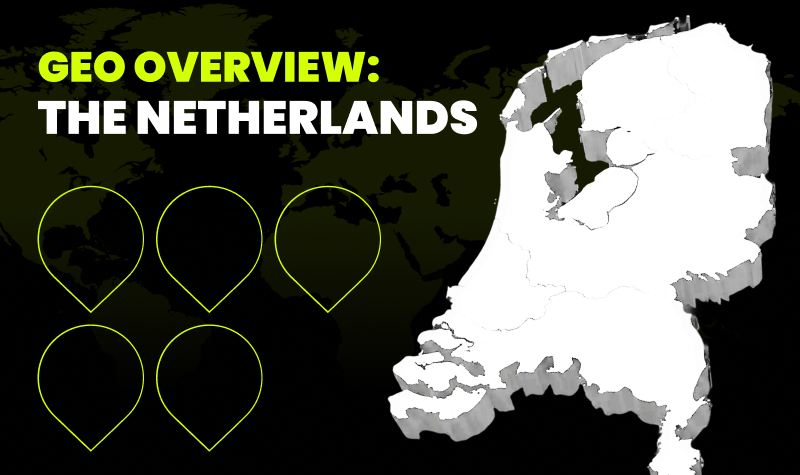
The Netherlands is one of the most economically developed countries in Europe, with a high standard of living, modern digital infrastructure, and a stable currency. Gambling in the country is legal and regulated by the state, both online and offline.

The sector is overseen by the Netherlands Gambling Authority (Kansspelautoriteit, KSA) – one of the strictest regulators in Europe, ensuring market transparency and player protection. KSA is a kind of “security at the club entrance” that checks every operator before they are allowed to work in the country.

Regulation and Policy

KSA imposes strict requirements on licensed operators: mandatory identity verification, control of deposit limits, and responsible gambling policies.

In the coming months, the regulator plans to introduce a full ban on gambling advertising, including sports sponsorships and affiliate programs. These measures are already contributing to the growth of the grey/black market, where players are attracted by the lack of restrictions and simplified registration.

According to KSA data, financial flows to illegal platforms are growing, which reduces the effectiveness of state control.

Economy and Population

The employment rate in the country is around 82%, unemployment is 3.7%, and long-term unemployment is 0.5%. Among young people, the figure is higher – around 9% do not have permanent employment. The average salary in the Netherlands is about €3,500, with a minimum of €2,300–2,500 per month. The poverty rate is low – about 3.2% of the population, but in large cities such as Amsterdam, Rotterdam, and The Hague it reaches around 6%.

The main cities include Amsterdam, Rotterdam, The Hague, Utrecht, and Groningen, each being an important cultural and economic hub.

The religious composition of the population is diverse: around 57% identify as atheists, 17% as Catholics, 14.8% as Protestants, 6% as Muslims, and 5.2% represent other religions (Hinduism, Buddhism, Judaism, etc.).

Mentality

The Dutch value order, planning, and a rational approach to life. They generally avoid ostentatious displays of wealth, preferring sensible spending and investment in housing.

Society is built on principles of equality and tolerance. Managers and employees, parents and children, teachers and students interact on almost equal terms. Most people prefer a small but strong circle of close contacts and rarely seek to actively expand it.

iGaming Market: Structure and Dynamics

The Netherlands made a huge step forward in gambling regulation in February 2019, when a law was passed that finally gave the green light to online casinos. But the real “revolution” came on 1 April 2021, when the licensing system came into force, allowing legal operators to apply and enter the market.

According to KSA reports, the gross gaming revenue (GGR) of the gambling sector last year amounted to €1.47 billion, which is 6% more than the year before. The number of registered gaming accounts reached 1.07 million per month, but the number of actually active players fell to 455,000 monthly.

The market remains predominantly focused on online casinos, which account for around 72% of total GGR. Online betting represents roughly 7% of the overall gambling market.

According to KSA, the share of illegal operators reaches about 13% of GGR. However, the real figure is likely higher: every month Dutch residents make around 700,000 search queries related to unlicensed gambling platforms. Interest in the grey sector is growing against the backdrop of stricter regulation and advertising restrictions.

Betting

Football remains the undisputed leader among sports for betting. Dutch players actively place bets on Eredivisie matches, as well as on major foreign leagues – the English Premier League, La Liga, and the Bundesliga. The highest activity is observed during European club competitions, especially in the Champions League and Europa League playoffs.

Besides football, tennis, hockey, MMA, cycling, basketball, and esports also enjoy popularity.

Online Casinos and Player Preferences

In the online casino segment, classic fruit and “7s” slots still hold strong positions. Interest is growing in themed games with pirate, Egyptian, and fantasy settings. Additional mini-games with the potential for big wins and progressive jackpots are particularly attractive to users.

The most popular online slots among Dutch players include: Sweet Bonanza, Gates of Olympus, Book of Dead, Starburst, Big Bass Bonanza.

Most players prefer mobile apps of gambling platforms over web versions. The development of the cryptocurrency market makes crypto casinos especially in demand, offering modern payment methods and a higher level of privacy.

Payment Systems and Devices

Mobile devices generate around 60% of gambling traffic, desktops about 35%, and tablets roughly 5%.

The most popular payment methods are Visa, Mastercard, Bancontact, iDEAL, Klarna, and PaysafeCard.

There are over 15 million active social media users in the Netherlands. Internet penetration reaches 99%, with more than 17 million users. The average Wi-Fi speed is about 93 Mbps, and mobile internet speeds are around 20 Mbps.

Combating Illegal Platforms and Protecting Youth

The main goal of the Dutch authorities is to prevent the spread of gambling among young people. The growing popularity of illegal websites indicates the need to strengthen oversight and improve the licensing framework.

From 1 January 2026, new rules for obtaining online gambling licenses will come into effect. Operators will be required to provide detailed risk analyses, an exit plan, and undergo more rigorous checks when renewing their licenses. Criteria will include player protection, advertising policy, and integration with the regulator’s central database.

There are also plans to enhance age verification systems and detect fraudulent use of false documents. An increase of the minimum age for certain types of gambling from 18 to 21 is under discussion.

KSA will receive expanded powers to block unlicensed websites, work directly with payment providers, and monitor affiliated structures. Responsibility for promoting unlicensed operators will also extend to marketing and advertising agencies.

Limits

Deposit limits in the Netherlands are as follows: for players over 25 years old – no more than €700 per month; for users aged 18–24 – up to €300. When a limit is exceeded, a financial capability check and additional verification are carried out. Operators are obliged to monitor signs of gambling addiction and intervene when necessary.

In addition, from 1 July of the current year, a full ban on sports sponsorships by gambling brands has come into force.

Practical Recommendations

To successfully promote offers in the Dutch market, it’s vital to take into account local audience specifics and adapt your approach to their behavior and values.

  • Study the audience in depth.
    The average player is around 35 years old, but different age groups respond to advertising differently. Younger users prefer interactive and dynamic formats, while older audiences value simplicity, stability, and clarity. They react better to realistic messages — not promises of easy money, but examples of how additional income can help achieve concrete goals: paying off a mortgage, building a financial cushion, or securing a calm retirement.
  • Emphasize rationality and financial sense.
    The Dutch appreciate practicality and thoughtful money management. Campaigns that appeal to the ideas of sensible investment or financial independence are perceived particularly well. This approach has proven effective in other countries and shows strong results in the Netherlands, where the level of education and critical thinking is traditionally high.
  • Localization and creative testing.
    Even if key gambling terms are universal, copy should be adapted to the local context. References to regional events, cultural specifics, or local promos increase trust. The Dutch value directness and honesty, so avoid overpromising and convoluted language. Your messaging should be as clear and transparent as possible.
  • Collaboration and analytics.
    Build partnerships with local bloggers, gambling experts, and digital marketers. Use modern analytics tools – Google Analytics, Hotjar, and local solutions – to track user behavior in detail and optimize campaigns.

Conclusion

The gambling market in the Netherlands shows steady growth despite increasing regulation. KSA aims to build a transparent and safe ecosystem, but the risk of illegal sector expansion remains.

In the coming years, key trends will include tighter regulations, growth of crypto and mobile segments, and market consolidation around major operators. To succeed in the Dutch market, companies need to remain flexible, strictly comply with regulatory requirements, and invest in technology, localization, and responsible gambling practices.

How iGaming Retains Players During the Holiday Season: Strategy Breakdown

December and early January are peak season for iGaming platforms. Users suddenly get more free time, holiday bonuses, and the desire for festive entertainment and gifts — while operators get a chance not only to attract new players, but also re-engage dormant users and retain their current audience.

Modern casinos no longer rely on simple one-off bonuses. Instead, they build complex, gamified, and personalized campaigns that encourage players to log in more often, interact with the platform, and stay active throughout the entire holiday period.

Which retention strategies actually work? Let’s break them down.

Key Holiday Campaign Formats

1. Welcome / Reload and Holiday Deposit Bonuses

In December, many casinos push boosted deposit offers — often 100% or higher — plus additional free spins.

Example:
A promotion offering 100% + 100 free spins on the first deposit, with a full welcome package reaching €1,000 + free spins.

These mechanics create a “second-chance effect” for returning dormant players and motivate new users to start playing during the festive season.

2. Advent Calendars and Daily Gifts

One of the most popular formats is the Christmas Calendar, where players open a daily “window” and receive free spins, mini-bonuses, cashback, or lottery entries. There’s often an extra reward for daily activity or participation in a final prize draw.

This format drives daily retention, as users keep coming back for their next reward.

3. Tournaments and Competitive Events

Winter tournaments and leaderboards are powerful retention tools. Players compete for cash, free spins, gadgets, iPhones, travel packages, or gift bundles.

Many tournaments are split into weekly stages, keeping users active throughout the season. Competition and the chance to win “more than just a bonus” dramatically increase emotional engagement.

4. Combined and Flexible Bonus Schemes

Platforms mix deposit bonuses, free spins, cashback, and daily prize drops. Some campaigns include no-deposit spins or minimum-stake bonuses, lowering entry barriers.

Such flexibility helps retain different user segments — from beginners to experienced players.

5. Gamification and Personalization

Casinos now rely on personalized offers based on behavioral analytics, preferences, and past activity. Gamified loyalty systems include missions, achievements, task chains, and XP-progression.

During the holidays, these become festive quests, significantly boosting engagement and retention.

6. Enhanced Cashback and “Soft” Offers

Many casinos temporarily increase cashback — from the usual 5% to 15–25% during the holiday season. This lowers psychological barriers and encourages users to stay active even after losses.

7. Technology and UX

During the holidays, casinos don’t rely on occasional notifications — they use intensive, themed push messages and in-app prompts that stimulate daily returning behavior.

Unlike standard campaigns, holiday promotions include several touchpoints a day, pushing users to check the platform again and again.

With strong UX, seamless mobile design, and personalized messaging, casinos maintain high engagement through December and January, boosting retention and revenue.

Why These Mechanics Work

Personalization increases perceived value and attention from the platform.
Gamification and missions build emotional involvement and nudge players to return daily.

The combination of evergreen offers and seasonal campaigns ensures consistent retention and periodic spikes of activity. Tournaments and leaderboards strengthen player interaction and create a sense of community, while cashback and soft offers lower barriers for re-deposit and increase LTV.

Conclusion

For iGaming, the holiday season is much more than simple bonus giveaways. Complex campaigns, daily missions, tournaments, advent calendars, personalized push notifications, and enhanced cashback all work as engagement boosters, driving retention and conversions.

During this period, players are at their most active, open to entertainment, and ready to interact with platforms — meaning every marketing element, from UX to festive events, directly increases LTV.

In other words:
New Year is the best time to scale traffic, as holiday mechanics themselves generate retention and keep players coming back.

Why iGaming Licenses Matter and How They Work

In the world of online casinos, player trust is everything. Some platforms inspire confidence and make you want to come back, while others feel suspicious and push users away. The key factor here is the license. In iGaming, a license is not just a document on a shelf – it’s a guarantee that the platform operates fairly, safely, and within the law.

Why is having a license so important, and how does it really affect an operator’s work? Let’s break it down.

Core Functions of a License

A gambling license in the iGaming industry performs several critical functions:

  1. Regulation and oversight
    The license sets the framework in which the operator must work, including game fairness, payment security, and player protection.
  2. Player protection
    Licensed platforms are required to comply with safety standards, fight money laundering, and implement measures to prevent gambling addiction.
  3. Legal legitimacy
    Only a licensed operator can legally accept bets, sign contracts, and work with partners within the law.
  4. Financial transparency
    A license implies audits, mandatory financial reporting, and tax compliance.

In other words, a license is a guarantee that players are less likely to become victims of fraud, and that the business can grow legally without constant risk of blocks and fines.

Types of iGaming Licenses

There are several popular types of iGaming licenses worldwide, differing by jurisdiction and level of control:

  • UKGC (United Kingdom Gambling Commission)
    One of the most prestigious licenses in the industry. Very strict requirements for player protection, audits, financial transparency, and fair-play rules. Hard to obtain, but having a UKGC license instantly boosts an operator’s status worldwide.
  • Malta (MGA – Malta Gaming Authority)
    A strict European license, respected by both players and banks globally. Operators must undergo regular audits of Random Number Generators (RNG), player identity checks (KYC), and financial control. MGA provides high trust but is expensive to obtain and maintain.
  • Curaçao eGaming
    Popular among international operators due to its low cost and flexible conditions. Supervision is softer here, but the license is suitable for those who want to go to market quickly, especially with a global audience. It doesn’t provide the same level of trust as MGA or UKGC.
  • Isle of Man (IoM)
    A license for operators who focus on security and player trust. It requires strict standards for financial reporting and personal data protection. Considered prestigious among players who prefer reliable platforms.
  • Canada (Kahnawake)
    A specific license for operators targeting the North American market and some European regions. Has its own audit and transparency requirements. Used less frequently but valued by those working with Canadian and North American audiences.
  • Gibraltar (Gibraltar Regulatory Authority)
    A prestigious license for international operators, often chosen by large brands. High requirements for financial reporting, KYC, and player protection. Recognized in many EU countries, although Brexit has changed some regulatory nuances.

You can also find licenses from Costa Rica, Antigua and Barbuda, and Belize. Unlike European licenses, they don’t enforce strict control over payouts, player safety, and audits.
Pros: low cost, fast registration, and flexibility in bonuses and marketing.
Cons: weak player protection and limited reputation in European and North American markets. These are usually chosen by offshore operators targeting international traffic.

What a License Gives to an Operator

In iGaming, a license is a full-fledged business tool that opens a range of opportunities:

  • Access to payment systems
    Without a license, banks and major payment providers don’t want to cooperate. The license becomes a “pass” to reliable deposit and withdrawal methods, reducing the risk of blocks and issues with financial partners.
  • Increased player trust
    Players intuitively check for a license. It acts as a guarantee of fair play, data security, and payouts. Without it, even a beautiful interface and generous bonuses feel suspicious and lead to churn.
  • International expansion
    A license allows operators to legally attract players from countries with strict regulations. The operator can officially enter new markets, run advertising campaigns, and cooperate with local partners without fear of being blocked or fined.
  • Marketing advantages
    A license makes the platform more attractive to affiliate networks. Partners prefer to work with legal platforms to reduce risks of legal disputes and payment issues.
  • Protection from restrictions and sanctions
    Without a license, an operator is severely limited: banks and PSPs may refuse service, player trust drops, and access to regulated markets is closed. On top of that, unlicensed businesses risk being blocked by authorities or removed from key platforms, making operations unstable and vulnerable.

A license protects the operator, strengthens player trust, and opens the way to legal international growth.

How Operators Choose a Jurisdiction: Comparing Popular Licenses

Choosing an iGaming license is like choosing a country to open your business in. It affects everything: player trust, banking access, tax burden, and how seriously partners will take you.

Each jurisdiction has its own “character”:

  • Malta (MGA) and the UK (UKGC) — the “gold standard” for regulated operators. These licenses are chosen by those building a long-term reputation. Many requirements: audits, security checks, payout control. In return, you get maximum trust from banks, investors, and players.
  • Curaçao — the opposite approach: minimal bureaucracy and fast approval. Ideal for startups and international platforms that want to launch quickly with low costs. The downside: lower trust level, since regulatory oversight is weaker.
  • Isle of Man — the choice for long-term, reputation-focused operators. A “premium” image: strict requirements for transparency, player protection, and financial guarantees, but in exchange the brand gets stability and a strong reliability image.
  • Canada (Kahnawake) — more of a niche option. Often chosen by operators working with cryptocurrencies or specific regions. Easier permissions, lower taxes, but also more limited legal protection.

When picking a license, you can’t just look at price and speed. You need to consider tax rates, regulator reputation, level of supervision, ability to connect payment systems, and access to banks.

A good license is not just “permission to operate.” It’s the foundation for trust and stability.

How a License Is Obtained: From Application to Approval

Obtaining an iGaming license is like launching a business on hard mode. Every detail matters — from the origin of capital to company structure and software.

  1. Document preparation
    The operator collects a full package: company documents, financial statements, descriptions of technical systems, data protection measures, and responsible gambling policies. Directors and shareholders go through fit-and-proper checks.
  2. Software review
    The regulator analyses RNG performance, payout systems, storage of user data, and fraud-prevention mechanisms. Independent auditors are often involved at this stage.
  3. Financial control
    Capital origin, payment flows, and player fund protection are checked. In some jurisdictions, like Malta, operators must maintain separate player fund accounts or reserves.
  4. Approval and certification
    If everything is in order, the company receives the license and can legally operate. But that’s not the end: most regulators require annual audits, recertification of software, and regular reporting.

Example: MGA (Malta)
The process takes about 3–6 months. The regulator checks not only legal and technical documents but also the business plan, revenue forecasts, and the ability to cover player balances. Violations can lead to fines or license revocation.

Curaçao license
Here the process is much faster and simpler: 2–6 weeks with a minimal set of documents — incorporation papers, proof of funds, and a basic platform description. Oversight is lighter; audits are selective, and detailed financial reporting is not always mandatory.

Main advantages: low cost and flexibility. An operator can work with international traffic, accept crypto, and avoid heavy bureaucracy. The trade-off: lower trust from players and banks compared to MGA or UKGC. Many big brands use Curaçao as a starting point and later move to more prestigious licenses.

Conclusion

A license is the currency of trust in the global iGaming market. In a world where digital borders are fading and competition keeps growing, legality becomes the main competitive edge.

Regulation is no longer the enemy of innovation — it helps build sustainable business models where transparency and player protection define a brand’s reputation.

A licensed platform doesn’t just gain the right to accept bets — it earns the right to be trusted. And in today’s gaming industry, that’s exactly what determines success.