



test article
NEw new test

test article
NEw new test

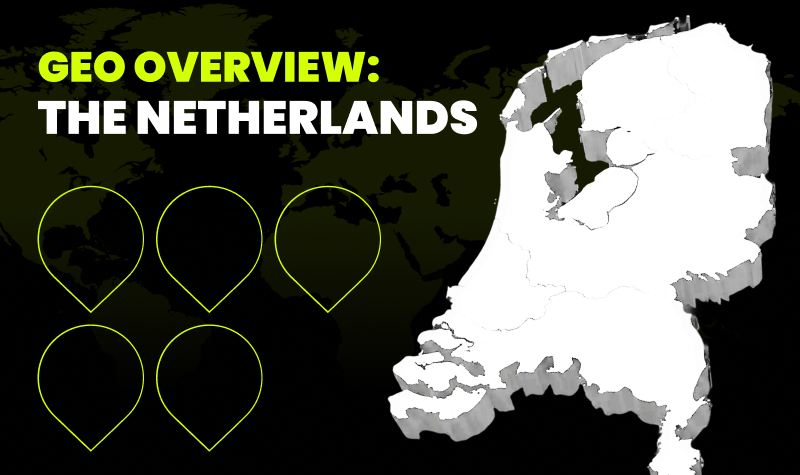
The Netherlands is one of the most economically developed countries in Europe, with a high standard of living, modern digital infrastructure, and a stable currency. Gambling in the country is legal and regulated by the state, both online and offline.
The sector is overseen by the Netherlands Gambling Authority (Kansspelautoriteit, KSA) – one of the strictest regulators in Europe, ensuring market transparency and player protection. KSA is a kind of “security at the club entrance” that checks every operator before they are allowed to work in the country.
KSA imposes strict requirements on licensed operators: mandatory identity verification, control of deposit limits, and responsible gambling policies.
In the coming months, the regulator plans to introduce a full ban on gambling advertising, including sports sponsorships and affiliate programs. These measures are already contributing to the growth of the grey/black market, where players are attracted by the lack of restrictions and simplified registration.
According to KSA data, financial flows to illegal platforms are growing, which reduces the effectiveness of state control.
The employment rate in the country is around 82%, unemployment is 3.7%, and long-term unemployment is 0.5%. Among young people, the figure is higher – around 9% do not have permanent employment. The average salary in the Netherlands is about €3,500, with a minimum of €2,300–2,500 per month. The poverty rate is low – about 3.2% of the population, but in large cities such as Amsterdam, Rotterdam, and The Hague it reaches around 6%.
The main cities include Amsterdam, Rotterdam, The Hague, Utrecht, and Groningen, each being an important cultural and economic hub.
The religious composition of the population is diverse: around 57% identify as atheists, 17% as Catholics, 14.8% as Protestants, 6% as Muslims, and 5.2% represent other religions (Hinduism, Buddhism, Judaism, etc.).
The Dutch value order, planning, and a rational approach to life. They generally avoid ostentatious displays of wealth, preferring sensible spending and investment in housing.
Society is built on principles of equality and tolerance. Managers and employees, parents and children, teachers and students interact on almost equal terms. Most people prefer a small but strong circle of close contacts and rarely seek to actively expand it.
The Netherlands made a huge step forward in gambling regulation in February 2019, when a law was passed that finally gave the green light to online casinos. But the real “revolution” came on 1 April 2021, when the licensing system came into force, allowing legal operators to apply and enter the market.
According to KSA reports, the gross gaming revenue (GGR) of the gambling sector last year amounted to €1.47 billion, which is 6% more than the year before. The number of registered gaming accounts reached 1.07 million per month, but the number of actually active players fell to 455,000 monthly.
The market remains predominantly focused on online casinos, which account for around 72% of total GGR. Online betting represents roughly 7% of the overall gambling market.
According to KSA, the share of illegal operators reaches about 13% of GGR. However, the real figure is likely higher: every month Dutch residents make around 700,000 search queries related to unlicensed gambling platforms. Interest in the grey sector is growing against the backdrop of stricter regulation and advertising restrictions.
Football remains the undisputed leader among sports for betting. Dutch players actively place bets on Eredivisie matches, as well as on major foreign leagues – the English Premier League, La Liga, and the Bundesliga. The highest activity is observed during European club competitions, especially in the Champions League and Europa League playoffs.
Besides football, tennis, hockey, MMA, cycling, basketball, and esports also enjoy popularity.
In the online casino segment, classic fruit and “7s” slots still hold strong positions. Interest is growing in themed games with pirate, Egyptian, and fantasy settings. Additional mini-games with the potential for big wins and progressive jackpots are particularly attractive to users.
The most popular online slots among Dutch players include: Sweet Bonanza, Gates of Olympus, Book of Dead, Starburst, Big Bass Bonanza.
Most players prefer mobile apps of gambling platforms over web versions. The development of the cryptocurrency market makes crypto casinos especially in demand, offering modern payment methods and a higher level of privacy.
Mobile devices generate around 60% of gambling traffic, desktops about 35%, and tablets roughly 5%.
The most popular payment methods are Visa, Mastercard, Bancontact, iDEAL, Klarna, and PaysafeCard.
There are over 15 million active social media users in the Netherlands. Internet penetration reaches 99%, with more than 17 million users. The average Wi-Fi speed is about 93 Mbps, and mobile internet speeds are around 20 Mbps.
The main goal of the Dutch authorities is to prevent the spread of gambling among young people. The growing popularity of illegal websites indicates the need to strengthen oversight and improve the licensing framework.
From 1 January 2026, new rules for obtaining online gambling licenses will come into effect. Operators will be required to provide detailed risk analyses, an exit plan, and undergo more rigorous checks when renewing their licenses. Criteria will include player protection, advertising policy, and integration with the regulator’s central database.
There are also plans to enhance age verification systems and detect fraudulent use of false documents. An increase of the minimum age for certain types of gambling from 18 to 21 is under discussion.
KSA will receive expanded powers to block unlicensed websites, work directly with payment providers, and monitor affiliated structures. Responsibility for promoting unlicensed operators will also extend to marketing and advertising agencies.
Deposit limits in the Netherlands are as follows: for players over 25 years old – no more than €700 per month; for users aged 18–24 – up to €300. When a limit is exceeded, a financial capability check and additional verification are carried out. Operators are obliged to monitor signs of gambling addiction and intervene when necessary.
In addition, from 1 July of the current year, a full ban on sports sponsorships by gambling brands has come into force.
To successfully promote offers in the Dutch market, it’s vital to take into account local audience specifics and adapt your approach to their behavior and values.
The gambling market in the Netherlands shows steady growth despite increasing regulation. KSA aims to build a transparent and safe ecosystem, but the risk of illegal sector expansion remains.
In the coming years, key trends will include tighter regulations, growth of crypto and mobile segments, and market consolidation around major operators. To succeed in the Dutch market, companies need to remain flexible, strictly comply with regulatory requirements, and invest in technology, localization, and responsible gambling practices.
In the world of online casinos, player trust is everything. Some platforms inspire confidence and make you want to come back, while others feel suspicious and push users away. The key factor here is the license. In iGaming, a license is not just a document on a shelf – it’s a guarantee that the platform operates fairly, safely, and within the law.
Why is having a license so important, and how does it really affect an operator’s work? Let’s break it down.
A gambling license in the iGaming industry performs several critical functions:
In other words, a license is a guarantee that players are less likely to become victims of fraud, and that the business can grow legally without constant risk of blocks and fines.
There are several popular types of iGaming licenses worldwide, differing by jurisdiction and level of control:
You can also find licenses from Costa Rica, Antigua and Barbuda, and Belize. Unlike European licenses, they don’t enforce strict control over payouts, player safety, and audits.
Pros: low cost, fast registration, and flexibility in bonuses and marketing.
Cons: weak player protection and limited reputation in European and North American markets. These are usually chosen by offshore operators targeting international traffic.
In iGaming, a license is a full-fledged business tool that opens a range of opportunities:
A license protects the operator, strengthens player trust, and opens the way to legal international growth.
Choosing an iGaming license is like choosing a country to open your business in. It affects everything: player trust, banking access, tax burden, and how seriously partners will take you.
Each jurisdiction has its own “character”:
When picking a license, you can’t just look at price and speed. You need to consider tax rates, regulator reputation, level of supervision, ability to connect payment systems, and access to banks.
A good license is not just “permission to operate.” It’s the foundation for trust and stability.
Obtaining an iGaming license is like launching a business on hard mode. Every detail matters — from the origin of capital to company structure and software.
Example: MGA (Malta)
The process takes about 3–6 months. The regulator checks not only legal and technical documents but also the business plan, revenue forecasts, and the ability to cover player balances. Violations can lead to fines or license revocation.
Curaçao license
Here the process is much faster and simpler: 2–6 weeks with a minimal set of documents — incorporation papers, proof of funds, and a basic platform description. Oversight is lighter; audits are selective, and detailed financial reporting is not always mandatory.
Main advantages: low cost and flexibility. An operator can work with international traffic, accept crypto, and avoid heavy bureaucracy. The trade-off: lower trust from players and banks compared to MGA or UKGC. Many big brands use Curaçao as a starting point and later move to more prestigious licenses.
A license is the currency of trust in the global iGaming market. In a world where digital borders are fading and competition keeps growing, legality becomes the main competitive edge.
Regulation is no longer the enemy of innovation — it helps build sustainable business models where transparency and player protection define a brand’s reputation.
A licensed platform doesn’t just gain the right to accept bets — it earns the right to be trusted. And in today’s gaming industry, that’s exactly what determines success.
When most people hear “Switzerland”, they immediately think of local banks, signature watches, and stunning Alps. In the gambling world, this GEO also holds a special niche. It’s one of the most solvent markets in Europe, where players are willing to spend and average deposits can pleasantly surprise even seasoned industry professionals.
The problem is just one: Switzerland treats gambling even more strictly than bank accounts. And if you want good profit here, you need to know the rules of the game. All the nuances – below.
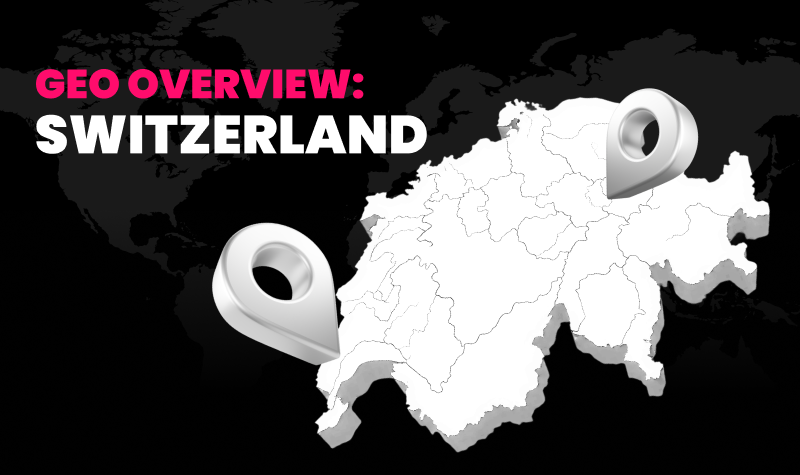
Switzerland is a small but incredibly wealthy country in the heart of Europe. It is bordered by Germany, France, Italy, Austria, and Liechtenstein, ranks 4th in the world by household wealth, and its economy remains stable despite global crises.
The population is about 8.7–9 million people. Demographics are growing thanks to migration, and a large share of people are of working age, which positively affects players’ purchasing power.
Switzerland is both conservative and progressive: there is no official state religion, the main confessions are Catholicism and various branches of Christianity. At the same time, LGBT rights are protected by law, and discrimination can lead to criminal liability.
The main cities where the core of the solvent audience is concentrated are Bern, Zurich, Geneva, Basel, Lausanne, and Winterthur.
The country has four official languages: German, French, Italian, and Romansh. But for gambling traffic, in 90% of cases you’re dealing with the German- and French-speaking segments.
The local currency is the Swiss franc (CHF). Use only CHF in your creatives: the Swiss don’t really like being offered products priced in euro.
The average salary is over 60,000 CHF a year. The audience is used to quality, reliability, and transparency. If you want their attention – show real value, bonuses, or benefits, but without aggression.
Switzerland legalized online gambling in 2018 and immediately set tight boundaries: there are only 8 licensed online casinos, and all of them belong to local land-based Swiss operators. The segment is heavily filtered, there are few offers, and competition is huge.
On the one hand, it’s a tough market. On the other – demand for entertainment is high, players are solvent, and LTV is noticeably higher than in most European countries.
The Swiss spend a lot. A strong economy and stable incomes make players relaxed about stakes and deposits. For them, gambling is a way to unwind, not an attempt to “win a new life”.
Preferences:
Despite strict laws, there is interest in unlicensed casinos – especially in regions where entertainment options are limited. People look for:
Players are ready to pay – and pay well – if they are offered truly attractive conditions.
The Swiss are almost ideal gambling customers: rational, safety-focused, analytical, and picky about service quality.
Behavioral features:
The older the audience (and the median age is ~43), the higher the deposits — but also the more careful they are in choosing a brand.
Switzerland is one of the most strictly regulated GEOs in Europe.
Key facts:
This means working “in white” is almost impossible, and buying traffic directly is extremely difficult.
Gambling oversight is handled by Gespa (Swiss Intercantonal Gambling Supervisory Authority). The Federal Act on Money Games (AMG) has been in force since 1 January 2019 – it regulates casino games, lotteries, and betting. Online casino licenses can only be obtained by operators that already hold a land-based casino license.
But the traffic still flows to grey offers. Players are actively seeking alternatives to strict local casinos, especially in German-speaking cantons.
98% of the population uses the internet. Around 7.5 million people are active on social media. Top platforms: TikTok, Instagram, Facebook, Reddit, Twitter, BeReal. Popular websites: YouTube, Google, Wikipedia. Online stores and local news portals are also highly valued.
The Swiss read a lot, analyse a lot, and like to study facts before buying or installing anything. That’s why, in creatives, the following works especially well:
Switzerland doesn’t have many public holidays, but traffic patterns change noticeably during them.
Holiday periods are a great time for promos and bonus offers, but on the actual days activity on social media may drop – people are resting.
Switzerland prohibits promoting:
Advertising must be careful, neutral, and as honest as possible.
Switzerland is a tough but incredibly promising GEO for gambling. Here you have:
Yes, the market is strictly regulated. Yes, “white” offers are almost inaccessible. But those who know how to work traffic correctly, segment the audience, and build careful, respectful communication get premium ROI.
If you do everything right, you have a good chance to pay off a watch not worse than a Swiss one — in just one successful month.
Good luck.